Karnali Chasipani Multipurpose Hydropower
Energy is a prime mover of almost all economic and technological advancement of any society and consequently plays a crucial role in the development of human welfare. There are different sources of energy viz. fossil fuels, petrochemicals, renewable energy resources etc. Amongst the renewable, Hydropower occupies an important place in Nepal.
Nepal is mountainous country with its great Himalayas on the north has abundant source of water flowing to the low land on south, creating high heads and great potentiality for hydropower generation. Realizing this fact and encompassing global wave of privatization, the Government of Nepal has formulated and enacted Electricity Act 2049, Electricity Regulation 2050 and Hydropower Policy 2058 to give emphasis on the development of Hydropower through the involvement of national as well as international private companies.
Having this far sighted view, Muktishree Pvt. Ltd has prepared a project summary report on, the power potential and irrigation benefits of Karnali (Chisapani) Multipurpose Project (KCMP) and submitted to Ministry of water resources through the Department of Electricity for survey license.
KCMP site is located on the Karnali River in western Nepal. The Karnali River drains approximately the far western part of Nepal and flows into India. The site is located 600 km west of Kathmandu and 500 km east of Delhi.
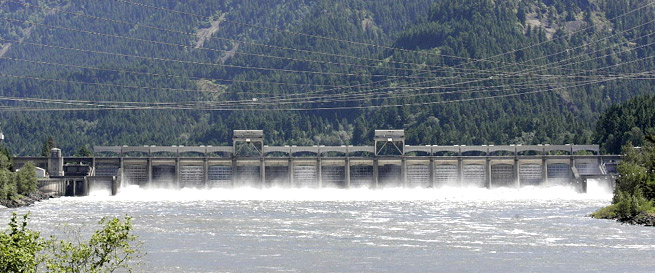
KCMP consists of a 270 meter high rock fill main dam with an installed capacity of 10,800 MW and 24 meter high re-regulating dam (at 8 km downstream of the main dam) with an installed capacity of 84 MW (6x 14 MW) and Irrigation potential in Nepal is 191,000 net hectors and 3,200,000 gross hectors in India. The regulated flow from the Karnali dam will provide incremental irrigation benefits to India due to augmentation of flow during the dry season. As Karnli (Chisapani) is a high dam multipurpose project, different types of benefits can be accessed from the project. For example power benefits, irrigation benefits, navigational benefits flood control etc.
The estimated cost of the project at 2008 price level is 6,834 Million US Dollars. This is one of the largest projects in the subcontinent.
 |  |